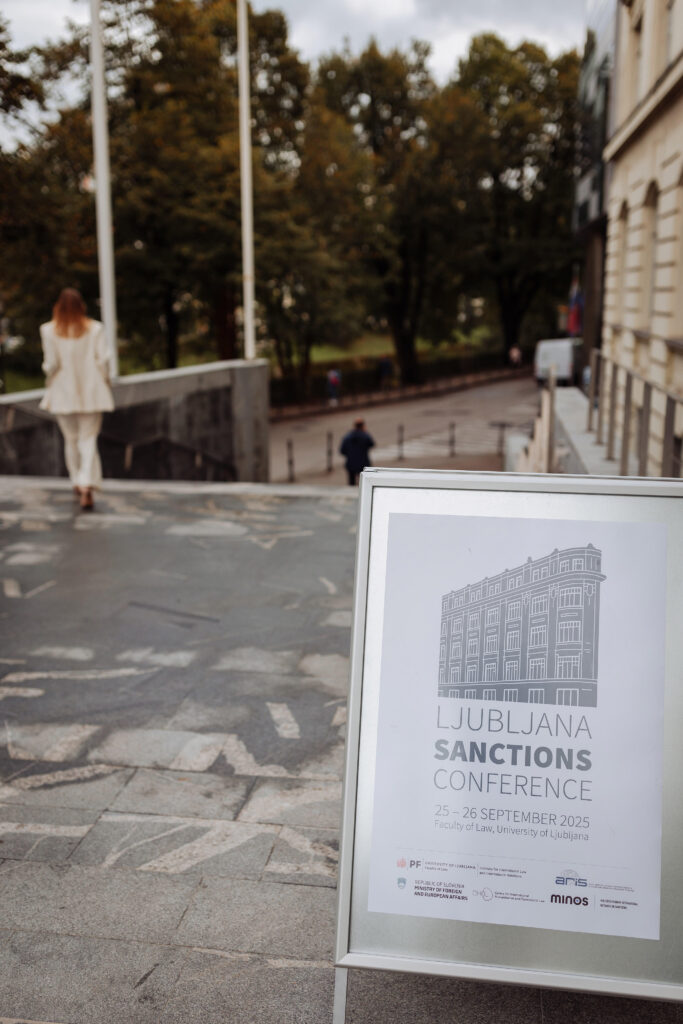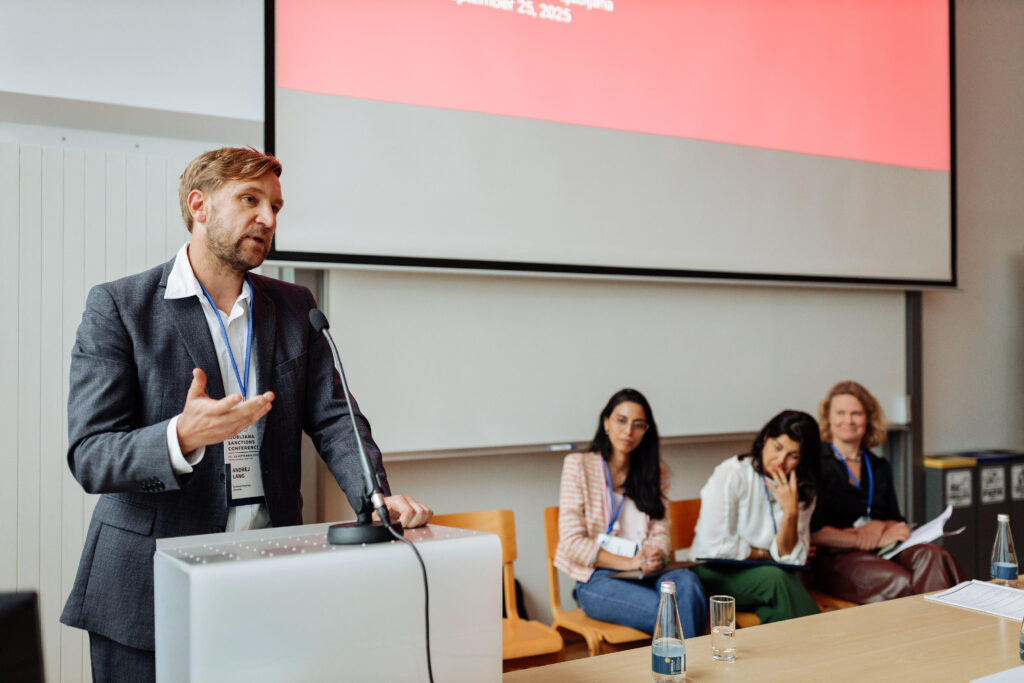


On September 25 and 26, 2025, the Ljubljana Sanctions Conference took place at the University of Ljubljana – organized by Maruša Veber (University of Ljubljana), Peter Van Elsuwege (University of Ghent), Celia Challet, and Marko Svicevic. Over the two days of the conference, participants from research, politics, and business discussed a wide range of current issues relating to European and international sanctions practice. The main topics were the EU sanctions imposed in response to Russia’s war of aggression against Ukraine and the future of the United Nations sanctions regime.
My presentation in the panel “Sanctions and Human Rights” entitled “New Developments in UN Sanctions: From Intergovernmentalism to Independent Review?” concluded the first day of the conference. In my article, I analyzed the mandate of the Focal Point for Delisting, which was fundamentally reformed by the United Nations Security Council in Resolution 2744 (2024), and contrasted it with the functioning of the Ombudsperson of the 1267 Sanctions Committee. The conclusion: The new mandate is a significant milestone, but at best represents only the beginning of a more extensive reform process. It was precisely the contrast between the apparent shortcomings of the procedure and its future development potential that occupied the audience in the ensuing discussion.